
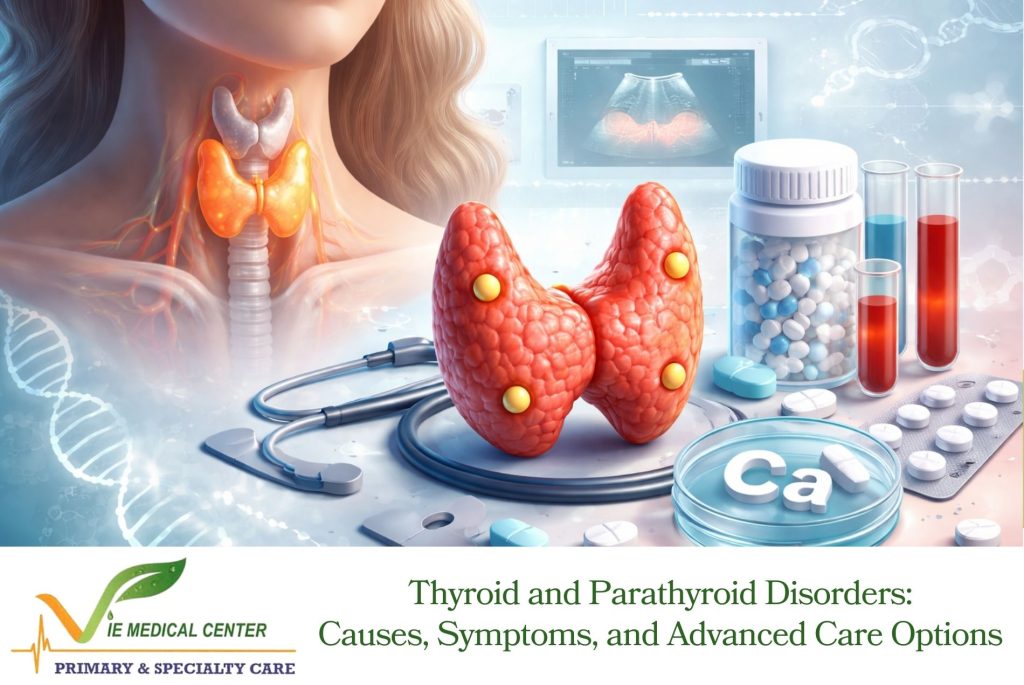
Thyroid and parathyroid disorders are common endocrine conditions that can significantly impact your overall health, energy levels, metabolism, and quality of life. Because their symptoms often mimic other medical issues, these disorders can go undiagnosed for years. At Vie Medical Center, our experienced medical team specializes in diagnosing and managing thyroid and parathyroid conditions using comprehensive evaluations and personalized treatment plans.
This article explores the differences between thyroid and parathyroid disorders, their symptoms, diagnostic approaches, and available treatment options to help patients make informed healthcare decisions.
What Is the Thyroid Gland?
The thyroid is a small, butterfly-shaped gland located at the base of the neck. It produces hormones—primarily T3 (triiodothyronine) and T4 (thyroxine)—that regulate metabolism, heart rate, body temperature, and energy levels.
Common Thyroid Disorders
- Hypothyroidism (underactive thyroid)
- Hyperthyroidism (overactive thyroid)
- Hashimoto’s Thyroiditis
- Graves’ Disease
- Thyroid Nodules
- Thyroid Cancer
What Are the Parathyroid Glands?
The parathyroid glands are four tiny glands located behind the thyroid. Despite their proximity, they serve a different function—regulating calcium levels in the blood and bones through parathyroid hormone (PTH).
Common Parathyroid Disorders
- Primary Hyperparathyroidism
- Secondary Hyperparathyroidism
- Parathyroid Adenomas
- Parathyroid Cancer (rare)
Symptoms of Thyroid and Parathyroid Disorders
Thyroid Disorder Symptoms
- Fatigue or weakness
- Weight gain or unexplained weight loss
- Cold or heat intolerance
- Hair thinning or hair loss
- Anxiety or depression
- Irregular heartbeat
- Changes in appetite
- Menstrual irregularities
Parathyroid Disorder Symptoms
- Bone pain or fractures
- Kidney stones
- Muscle weakness
- Depression or brain fog
- Excessive urination
- Abdominal pain or nausea
- Osteoporosis
Because these symptoms can overlap with other conditions, proper evaluation by an experienced provider is essential.
Diagnosis and Evaluation at Vie Medical Center
At Vie Medical Center, diagnosis begins with a thorough medical history and physical examination. Depending on symptoms, advanced diagnostic testing may include:
- Comprehensive blood panels (TSH, T3, T4, PTH, calcium levels)
- Thyroid and neck ultrasound
- Nuclear medicine scans
- Bone density testing
- Imaging studies when indicated
Our goal is early detection and precise diagnosis to prevent long-term complications.
Treatment Options
Thyroid Disorder Treatments
- Hormone replacement therapy
- Antithyroid medications
- Lifestyle and nutritional support
- Ongoing monitoring and medication adjustments
Parathyroid Disorder Treatments
- Active surveillance for mild cases
- Medical management of calcium imbalance
- Referral for minimally invasive surgery when necessary
- Bone health optimization
Treatment plans are individualized based on patient needs, lab findings, and overall health.
Comprehensive Q&A: Thyroid and Parathyroid Disorders
Q: What is the difference between thyroid and parathyroid disorders?
A: The thyroid regulates metabolism through hormone production, while the parathyroid glands control calcium balance. Disorders affect different systems and require distinct treatments.
Q: Can thyroid or parathyroid disorders cause weight changes?
A: Yes. Hypothyroidism often leads to weight gain, while hyperthyroidism may cause weight loss. Parathyroid disorders can indirectly affect weight through fatigue and metabolic changes.
Q: Are these disorders more common in women?
A: Yes. Thyroid disorders, particularly autoimmune conditions like Hashimoto’s and Graves’ disease, are significantly more common in women.
Q: Can these conditions be managed without surgery?
A: Many thyroid conditions are successfully managed with medication. Some parathyroid disorders require surgery, but mild cases may be monitored or managed medically.
Q: How often should thyroid or calcium levels be checked?
A: Frequency depends on diagnosis and treatment. Patients on medication typically require routine monitoring every few months or annually.
Q: Can untreated parathyroid disease cause serious complications?
A: Yes. Untreated hyperparathyroidism can lead to osteoporosis, kidney stones, cardiovascular issues, and cognitive symptoms.
Q: Do thyroid nodules always mean cancer?
A: No. Most thyroid nodules are benign. Further evaluation determines whether monitoring or treatment is needed.
Why Choose Vie Medical Center?
Vie Medical Center provides patient-centered care with a focus on precision diagnostics, compassionate treatment, and long-term health optimization. Our team takes the time to understand your symptoms, explain your results, and guide you through every step of care.
Contact Information
Vie Medical Center
2160 West Atlantic Ave., 1st Floor
Delray Beach, FL 33445
📞 Phone: (561) 425-8888
🌐 Website: viemedicalcenter.com