
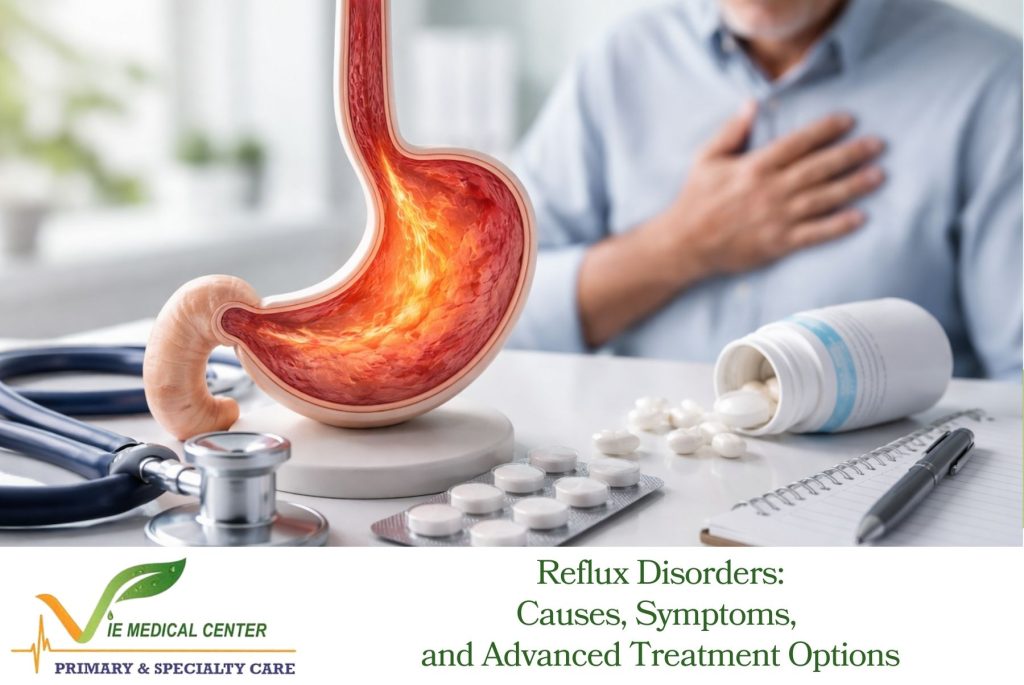
Reflux disorders are among the most common gastrointestinal conditions affecting adults in the United States. While occasional heartburn may seem harmless, chronic reflux can significantly impact quality of life and may lead to more serious health concerns if left untreated. At Vie Medical Center, our experienced medical team is dedicated to diagnosing and treating reflux disorders with personalized, evidence-based care.
This guide will help you understand reflux disorders, recognize symptoms, explore treatment options, and know when to seek professional care.
What Are Reflux Disorders?
Reflux disorders occur when stomach acid or contents flow backward into the esophagus, the tube connecting the mouth to the stomach. This backward flow can irritate the esophageal lining and lead to persistent discomfort or complications over time.
The most common reflux disorders include:
- Gastroesophageal Reflux Disease (GERD)
- Laryngopharyngeal Reflux (LPR), sometimes called “silent reflux”
- Acid Reflux (occasional symptoms without chronic disease)
Common Symptoms of Reflux Disorders
Reflux symptoms vary from person to person and may range from mild to severe. Common symptoms include:
- Heartburn or chest discomfort
- Regurgitation of acid or food
- Chronic cough or throat clearing
- Hoarseness or voice changes
- Difficulty swallowing
- Sensation of a lump in the throat
- Sour or bitter taste in the mouth
- Worsening symptoms after meals or when lying down
If symptoms occur more than twice a week or interfere with daily life, medical evaluation is recommended.
Causes and Risk Factors
Reflux disorders can develop due to a combination of lifestyle, anatomical, and medical factors, including:
- Weak or relaxed lower esophageal sphincter (LES)
- Obesity or excess abdominal pressure
- Hiatal hernia
- Smoking or alcohol use
- Pregnancy
- Certain medications
- Diets high in acidic, fatty, or spicy foods
Understanding the underlying cause is essential for effective treatment.
Potential Complications of Untreated Reflux
Chronic reflux should not be ignored. Without proper treatment, it can lead to complications such as:
- Esophagitis (inflammation of the esophagus)
- Esophageal strictures (narrowing)
- Barrett’s esophagus
- Increased risk of esophageal cancer
- Chronic throat and voice problems
Early diagnosis can help prevent long-term damage.
How Reflux Disorders Are Diagnosed
At Vie Medical Center, diagnosis begins with a thorough medical history and physical evaluation. Depending on symptoms, diagnostic testing may include:
- Upper endoscopy
- Esophageal pH monitoring
- Imaging studies
- Functional testing of the esophagus
Our goal is to identify the precise cause and severity of reflux to guide treatment decisions.
Treatment Options at Vie Medical Center
Treatment plans are customized based on each patient’s condition and lifestyle. Options may include:
Lifestyle and Dietary Modifications
- Avoiding trigger foods
- Eating smaller, more frequent meals
- Weight management
- Elevating the head during sleep
- Smoking cessation
Medications
- Acid-reducing medications
- Proton pump inhibitors (PPIs)
- H2 blockers
Advanced and Minimally Invasive Treatments
For patients who do not respond to conservative therapy, advanced treatment options may be recommended to control symptoms and prevent complications.
Comprehensive Q&A: Reflux Disorders
Q: Is heartburn the same as GERD?
A: Not exactly. Heartburn is a symptom, while GERD is a chronic condition involving frequent acid reflux.
Q: Can reflux occur without heartburn?
A: Yes. Laryngopharyngeal reflux (LPR) often causes throat symptoms without typical heartburn.
Q: Are reflux disorders permanent?
A: Many patients achieve excellent symptom control with proper treatment and lifestyle changes.
Q: When should I see a doctor for reflux?
A: If symptoms occur more than twice weekly, worsen over time, or cause swallowing difficulties, medical evaluation is recommended.
Q: Can reflux cause chest pain?
A: Yes. Reflux can mimic cardiac chest pain, which is why evaluation is important to rule out serious conditions.
Q: Are reflux medications safe long-term?
A: Medications are generally safe when monitored by a physician. Long-term use should be guided by medical advice.
Why Choose Vie Medical Center?
Vie Medical Center is committed to providing compassionate, patient-centered care with a focus on long-term digestive health. Our experienced providers use modern diagnostic tools and tailored treatment strategies to help patients achieve lasting relief from reflux disorders.
Contact Information
Vie Medical Center
2160 West Atlantic Ave., 1st Floor
Delray Beach, FL 33445
📞 Phone: (561) 425-8888
🌐 Website: viemedicalcenter.com