
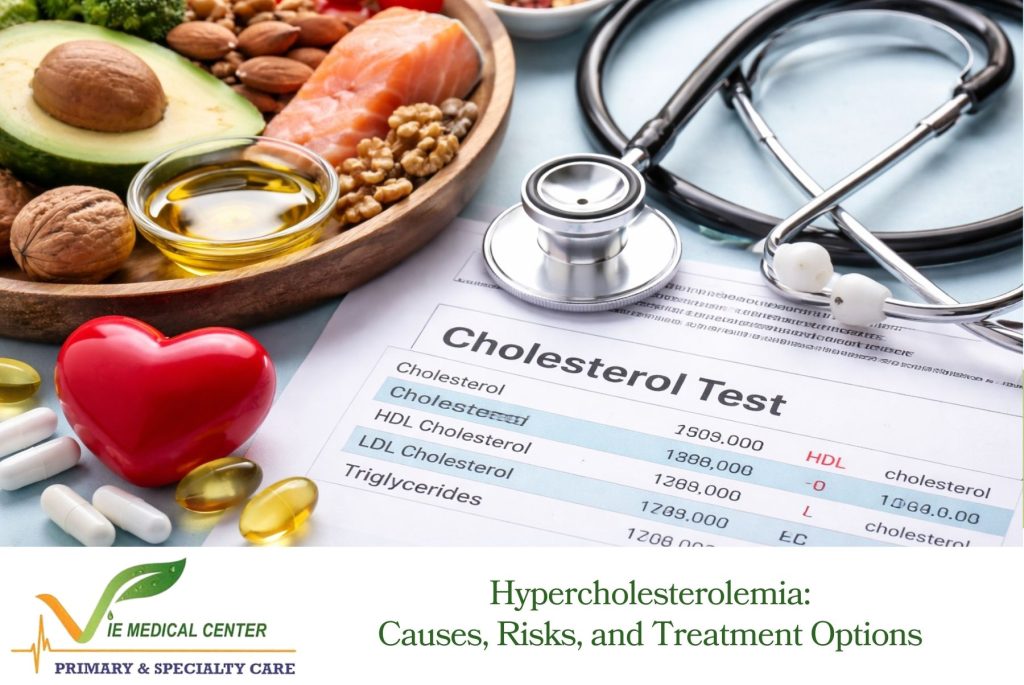
Hypercholesterolemia, commonly known as high cholesterol, is a widespread medical condition that significantly increases the risk of heart disease, heart attack, and stroke. Despite being common, it is often called a “silent condition” because many people experience no symptoms until serious complications occur. At Vie Medical Center, we believe education and early intervention are key to protecting your long-term health.
What Is Hypercholesterolemia?
Hypercholesterolemia occurs when there are excessive levels of cholesterol in the blood. Cholesterol is a waxy, fat-like substance that your body needs to build cells and produce certain hormones. However, too much cholesterol—especially low-density lipoprotein (LDL), often referred to as “bad cholesterol”—can build up in your arteries and restrict blood flow.
There are two main types:
- Primary (familial) hypercholesterolemia: A genetic condition passed down through families.
- Secondary hypercholesterolemia: Caused by lifestyle factors or other medical conditions such as obesity, diabetes, poor diet, or lack of physical activity.
Why High Cholesterol Is Dangerous
Excess cholesterol can lead to atherosclerosis, a condition in which plaque builds up in the arteries. Over time, this can:
- Reduce or block blood flow
- Increase blood pressure
- Lead to coronary artery disease
- Cause heart attacks or strokes
Because symptoms are often absent, routine blood testing is essential for early detection.
Common Causes and Risk Factors
Several factors contribute to hypercholesterolemia, including:
- Diet high in saturated and trans fats
- Sedentary lifestyle
- Obesity
- Smoking
- Excessive alcohol use
- Diabetes or metabolic syndrome
- Family history of high cholesterol or heart disease
- Aging (cholesterol levels tend to rise with age)
Diagnosis and Testing
Hypercholesterolemia is diagnosed through a lipid panel blood test, which measures:
- Total cholesterol
- LDL (bad cholesterol)
- HDL (good cholesterol)
- Triglycerides
At Vie Medical Center, we provide comprehensive cholesterol screenings and personalized evaluations to assess your cardiovascular risk.
Treatment Options for Hypercholesterolemia
Treatment is individualized and may include one or more of the following:
Lifestyle Modifications
- Adopting a heart-healthy diet rich in fruits, vegetables, whole grains, and lean proteins
- Reducing saturated fats and eliminating trans fats
- Increasing physical activity
- Weight management
- Smoking cessation
Medications
When lifestyle changes are not enough, medications may be recommended, such as:
- Statins
- Cholesterol absorption inhibitors
- PCSK9 inhibitors
- Bile acid sequestrants
Our providers work closely with patients to determine the safest and most effective treatment plan.
Preventing High Cholesterol
Prevention starts with awareness. Regular checkups, healthy lifestyle choices, and early intervention can significantly reduce the risk of complications associated with high cholesterol.
Frequently Asked Questions About Hypercholesterolemia
Q: Can I have high cholesterol even if I feel healthy?
A: Yes. High cholesterol typically has no symptoms, which is why regular screening is important.
Q: How often should cholesterol be checked?
A: Most adults should have their cholesterol checked every 4–6 years, or more often if they have risk factors or existing conditions.
Q: Is high cholesterol genetic?
A: It can be. Familial hypercholesterolemia is an inherited condition that causes very high cholesterol levels at a young age.
Q: Are medications always necessary?
A: Not always. Many patients can manage cholesterol through lifestyle changes, but medications may be necessary for higher-risk individuals.
Q: What foods help lower cholesterol?
A: Foods high in fiber, such as oats, beans, fruits, vegetables, and healthy fats like olive oil and fatty fish, can help improve cholesterol levels.
Q: Can high cholesterol be reversed?
A: While genetics play a role, many people can significantly improve their cholesterol levels with proper treatment and lifestyle changes.
Schedule Your Cholesterol Evaluation Today
If you are concerned about your cholesterol levels or cardiovascular health, the experienced medical team at Vie Medical Center is here to help. We offer comprehensive evaluations, advanced testing, and personalized care plans designed to support your heart health.
Contact Information
Vie Medical Center
2160 West Atlantic Ave., 1st Floor
Delray Beach, FL 33445
📞 Phone: (561) 425-8888
🌐 Website: viemedicalcenter.com