
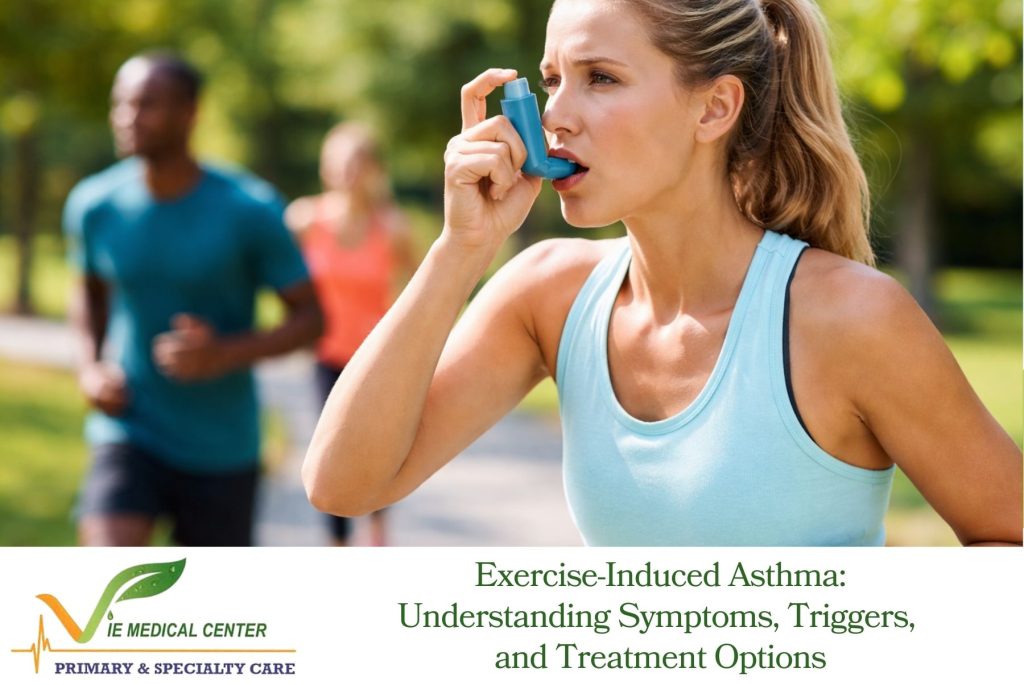
Exercise is essential for maintaining good health, but for some individuals, physical activity can trigger breathing difficulties. This condition, commonly known as Exercise-Induced Asthma—or more accurately, Exercise-Induced Bronchoconstriction (EIB)—affects people of all ages and fitness levels. At Vie Medical Center, we help patients understand, manage, and treat exercise-induced asthma so they can stay active and breathe easier.
What Is Exercise-Induced Asthma?
Exercise-induced asthma occurs when the airways temporarily narrow during or after physical activity, making it difficult to breathe. While it is more common in individuals with asthma, it can also affect people with no prior asthma diagnosis. Symptoms typically appear during exercise or within 5–15 minutes after stopping.
Common Symptoms of Exercise-Induced Asthma
Symptoms can vary in severity and may include:
- Shortness of breath
- Wheezing or whistling sounds while breathing
- Chest tightness or pain
- Coughing during or after exercise
- Fatigue or reduced exercise endurance
If these symptoms are ignored, they may worsen over time and interfere with daily activities and overall fitness.
What Triggers Exercise-Induced Asthma?
Several factors can increase the likelihood of experiencing symptoms, including:
- Cold, dry air
- High pollen levels or air pollution
- Respiratory infections
- Poorly controlled asthma
- High-intensity or prolonged exercise
Activities such as running, soccer, basketball, and ice skating are more commonly associated with EIB due to sustained breathing rates.
Diagnosis and Evaluation
At Vie Medical Center, diagnosing exercise-induced asthma involves a thorough medical history, physical examination, and specialized lung function testing. These may include:
- Spirometry testing before and after exercise
- Bronchoprovocation testing
- Evaluation of environmental and lifestyle factors
An accurate diagnosis is essential to developing an effective treatment plan.
Treatment and Management Options
The good news is that exercise-induced asthma is highly manageable. Treatment plans may include:
- Short-acting bronchodilators used before exercise
- Long-term controller medications for patients with underlying asthma
- Warm-up routines to reduce airway sensitivity
- Breathing techniques and fitness modifications
- Environmental adjustments, such as exercising indoors during poor air quality days
With proper treatment, most patients can safely participate in sports and physical activity.
Living an Active Life With Exercise-Induced Asthma
Many professional athletes successfully manage exercise-induced asthma. The key is understanding your triggers, following a personalized treatment plan, and working closely with a medical provider. At Vie Medical Center, we emphasize patient education and preventive care to help you maintain an active and healthy lifestyle.
Frequently Asked Questions About Exercise-Induced Asthma
Q: Is exercise-induced asthma the same as regular asthma?
A: Not exactly. Exercise-induced asthma refers specifically to airway narrowing triggered by physical activity. Some people with EIB do not have chronic asthma.
Q: Can exercise-induced asthma develop later in life?
A: Yes. It can occur at any age, even in individuals who have exercised for years without symptoms.
Q: Should I avoid exercise if I have exercise-induced asthma?
A: No. With proper treatment and precautions, regular exercise is encouraged and beneficial for lung health.
Q: What types of exercise are best for people with exercise-induced asthma?
A: Activities with short bursts of exertion—such as walking, yoga, strength training, or swimming in warm, humid environments—are often better tolerated.
Q: Can exercise-induced asthma be cured?
A: While there is no cure, symptoms can be effectively controlled with medical treatment and lifestyle adjustments.
Q: When should I see a doctor?
A: If you experience frequent breathing problems during or after exercise, or if symptoms worsen despite treatment, it’s important to seek medical care.
Contact Vie Medical Center
Vie Medical Center
2160 West Atlantic Ave., 1st Floor
Delray Beach, FL 33445
📞 Phone: (561) 425-8888
🌐 Website: viemedicalcenter.com