
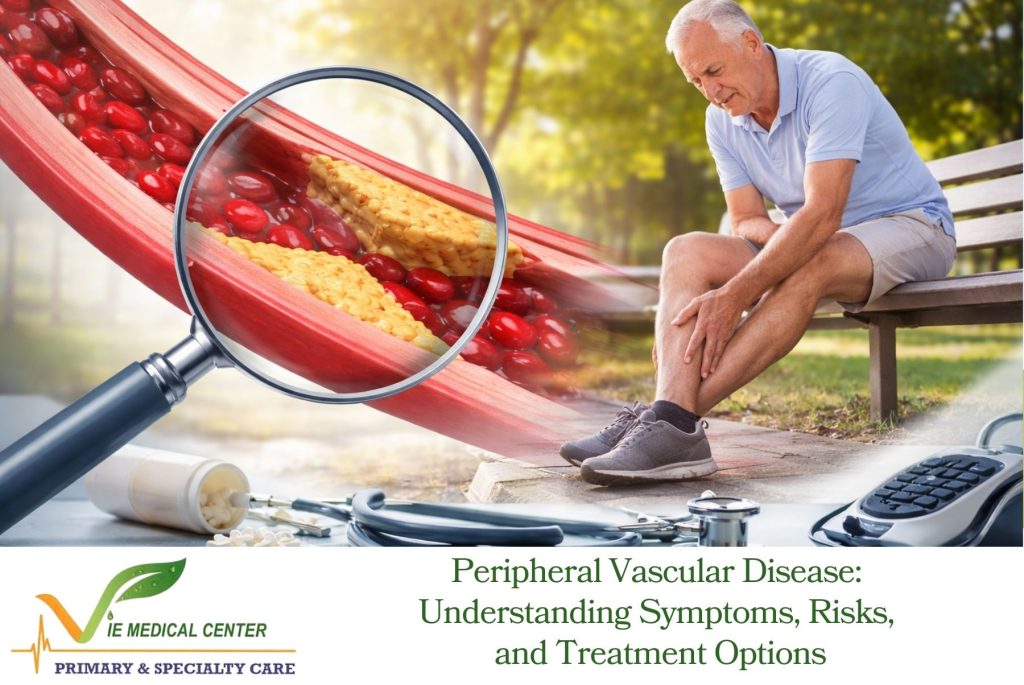
Peripheral Vascular Disease (PVD) is a common yet often underdiagnosed circulatory condition that affects millions of people in the United States. At Vie Medical Center, we believe that education is a critical step toward prevention, early detection, and effective treatment. This guide explains what Peripheral Vascular Disease is, who is at risk, and how modern medical care can help improve circulation and quality of life.
What Is Peripheral Vascular Disease?
Peripheral Vascular Disease refers to conditions that affect blood vessels outside of the heart and brain, most commonly the arteries supplying blood to the legs and feet. The most common form of PVD is Peripheral Artery Disease (PAD), which occurs when arteries become narrowed or blocked due to plaque buildup (atherosclerosis).
When blood flow is reduced, muscles and tissues may not receive enough oxygen, leading to pain, mobility issues, and, in severe cases, tissue damage.
Common Symptoms of Peripheral Vascular Disease
PVD symptoms can range from mild to severe and may worsen over time if left untreated. Common signs include:
- Leg pain or cramping when walking (claudication)
- Numbness, weakness, or heaviness in the legs
- Coldness in the lower leg or foot
- Slow-healing wounds or ulcers on the feet
- Skin discoloration or shiny skin on the legs
- Decreased hair growth on the legs or toes
- Weak or absent pulse in the legs or feet
Some individuals may not experience symptoms until the disease has progressed, making routine screening especially important.
Who Is at Risk for Peripheral Vascular Disease?
Several factors can increase the likelihood of developing PVD, including:
- Diabetes
- Smoking or tobacco use
- High blood pressure
- High cholesterol
- Obesity
- Sedentary lifestyle
- Family history of vascular disease
- Age 50 and older
Managing these risk factors can significantly reduce disease progression and complications.
Why Early Diagnosis Matters
If left untreated, Peripheral Vascular Disease can lead to serious complications such as chronic pain, infections, non-healing wounds, and even limb loss. Early diagnosis allows for less invasive treatments and better long-term outcomes.
At Vie Medical Center, advanced diagnostic tools help identify circulation issues early, even before severe symptoms appear.
Treatment Options for Peripheral Vascular Disease
Treatment plans are personalized based on disease severity, overall health, and patient goals. Common treatment approaches include:
Lifestyle Modifications
- Smoking cessation
- Regular walking or supervised exercise programs
- Dietary changes to improve cholesterol and blood pressure
- Weight management
Medications
- Blood thinners to prevent clot formation
- Cholesterol-lowering medications
- Medications to improve blood flow and reduce symptoms
Minimally Invasive Procedures
- Angioplasty and stenting
- Catheter-based treatments to restore circulation
Ongoing Monitoring
Regular follow-ups help track progress and prevent disease progression.
Peripheral Vascular Disease: Frequently Asked Questions
What is the difference between PVD and PAD?
Peripheral Artery Disease (PAD) is a type of Peripheral Vascular Disease. PVD is a broader term that includes artery, vein, and lymphatic vessel conditions, while PAD specifically affects arteries.
Is Peripheral Vascular Disease curable?
While PVD is typically a chronic condition, it is highly manageable. Early treatment and lifestyle changes can significantly improve symptoms and prevent complications.
Does walking help Peripheral Vascular Disease?
Yes. Supervised and structured walking programs are one of the most effective non-invasive treatments for improving circulation and reducing leg pain.
Can Peripheral Vascular Disease lead to amputation?
In severe, untreated cases, reduced blood flow can cause tissue damage and infections that may require amputation. Early diagnosis greatly reduces this risk.
When should I see a doctor for leg pain?
If you experience leg pain while walking, numbness, non-healing wounds, or changes in skin color or temperature, you should seek medical evaluation promptly.
Compassionate Vascular Care at Vie Medical Center
At Vie Medical Center, our team is committed to providing comprehensive, patient-centered care for individuals with Peripheral Vascular Disease. Using advanced diagnostics, minimally invasive treatments, and personalized care plans, we focus on restoring circulation and improving long-term vascular health.
Contact Information
Vie Medical Center
2160 West Atlantic Ave., 1st Floor
Delray Beach, FL 33445
📞 Phone: (561) 425-8888
🌐 Website: viemedicalcenter.com