
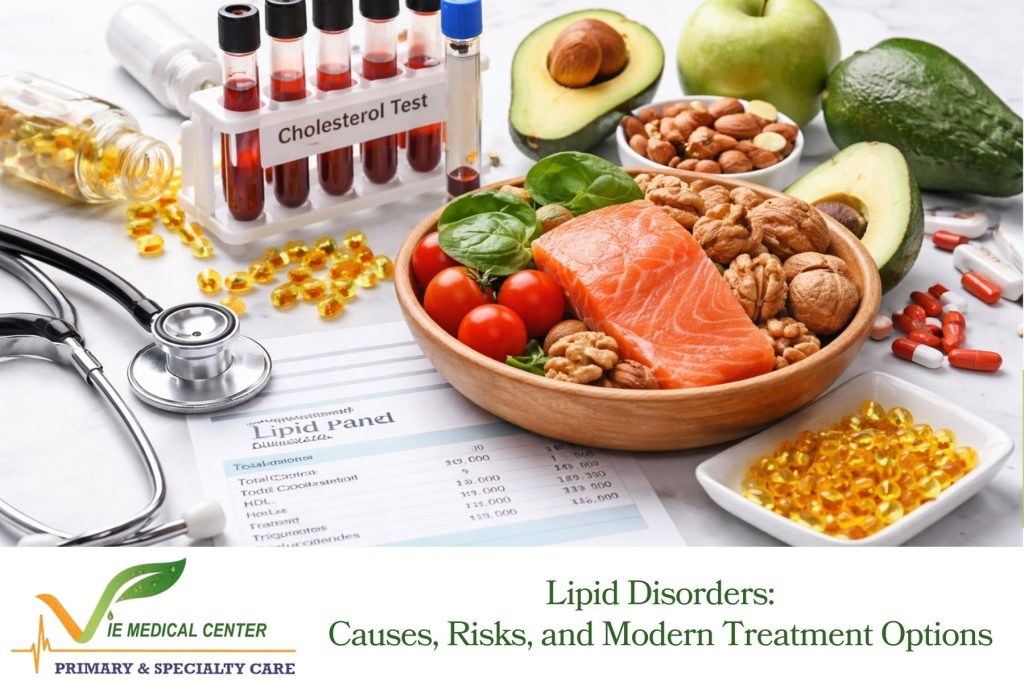
Lipid disorders, also known as dyslipidemia, are among the most common yet underdiagnosed health conditions in the United States. These disorders involve abnormal levels of lipids—such as cholesterol and triglycerides—in the blood, significantly increasing the risk of heart disease, stroke, and other cardiovascular complications.
At Vie Medical Center, we are committed to helping patients understand, manage, and treat lipid disorders through comprehensive evaluation, personalized care plans, and evidence-based medical treatments.
What Are Lipids and Why Do They Matter?
Lipids are fats that circulate in your bloodstream and play a critical role in your body’s normal function. The main types of lipids include:
- Low-Density Lipoprotein (LDL) – Often referred to as “bad cholesterol,” high levels can lead to plaque buildup in arteries.
- High-Density Lipoprotein (HDL) – Known as “good cholesterol,” it helps remove excess cholesterol from the bloodstream.
- Triglycerides – A type of fat used for energy; elevated levels increase cardiovascular risk.
- Total Cholesterol – A combined measurement of LDL, HDL, and other lipid components.
When these levels fall outside of healthy ranges, a lipid disorder may be present.
Common Types of Lipid Disorders
Lipid disorders can take several forms, including:
- Hypercholesterolemia – High LDL cholesterol
- Hypertriglyceridemia – Elevated triglycerides
- Low HDL Cholesterol
- Mixed Dyslipidemia – A combination of abnormal lipid levels
- Familial Hyperlipidemia – A genetic condition causing very high cholesterol levels at a young age
Some lipid disorders are inherited, while others develop due to lifestyle factors or underlying medical conditions.
Causes and Risk Factors
Several factors can contribute to lipid disorders, including:
- Poor diet high in saturated and trans fats
- Sedentary lifestyle
- Obesity
- Smoking
- Excessive alcohol consumption
- Diabetes or insulin resistance
- Hypothyroidism
- Kidney or liver disease
- Family history of high cholesterol or heart disease
- Certain medications
Understanding the underlying cause is essential for effective treatment.
Why Lipid Disorders Are Dangerous
Untreated lipid disorders can lead to serious health complications, such as:
- Coronary artery disease
- Heart attack
- Stroke
- Peripheral artery disease
- Pancreatitis (with very high triglycerides)
Because lipid disorders often have no noticeable symptoms, routine blood testing is crucial for early detection.
Diagnosis and Evaluation at Vie Medical Center
At Vie Medical Center, diagnosing lipid disorders begins with a comprehensive lipid panel blood test. Our providers also evaluate:
- Personal and family medical history
- Cardiovascular risk factors
- Lifestyle habits
- Other lab markers related to metabolic health
This thorough approach allows us to identify not only abnormal lipid levels but also the root causes driving them.
Treatment Options for Lipid Disorders
Treatment is personalized based on the type and severity of the disorder. Options may include:
Lifestyle Modifications
- Heart-healthy diet
- Weight management
- Regular physical activity
- Smoking cessation
- Limiting alcohol intake
Medications
- Statins
- Cholesterol absorption inhibitors
- PCSK9 inhibitors
- Fibrates
- Omega-3 fatty acid supplements
Our team works closely with patients to ensure treatment plans are effective, sustainable, and aligned with overall health goals.
Lipid Disorders Q&A
What are normal cholesterol levels?
In general, LDL should be below 100 mg/dL, HDL above 40 mg/dL for men and 50 mg/dL for women, triglycerides below 150 mg/dL, and total cholesterol under 200 mg/dL. Individual targets may vary based on risk factors.
Can lipid disorders be reversed?
Many lipid disorders can be significantly improved—and sometimes normalized—through lifestyle changes and proper medical treatment.
Are lipid disorders hereditary?
Yes, some lipid disorders are genetic and may require lifelong management, even with a healthy lifestyle.
How often should I have my cholesterol checked?
Most adults should be tested every 4–6 years, but those with risk factors may need more frequent monitoring.
Do I need medication if I feel fine?
Yes. Because lipid disorders are often asymptomatic, medication may be necessary to reduce long-term cardiovascular risk even if you feel well.
Can diet alone lower cholesterol?
In mild cases, diet and lifestyle changes may be enough. Moderate to severe cases often require medication in addition to lifestyle improvements.
Comprehensive Cardiovascular Care at Vie Medical Center
At Vie Medical Center, we take a proactive approach to cardiovascular health. Our goal is not only to treat lipid disorders but to reduce long-term health risks and improve overall quality of life through personalized, patient-centered care.
Contact Information
Vie Medical Center
2160 West Atlantic Ave., 1st Floor
Delray Beach, FL 33445
📞 Phone: (561) 425-8888
🌐 Website: viemedicalcenter.com