
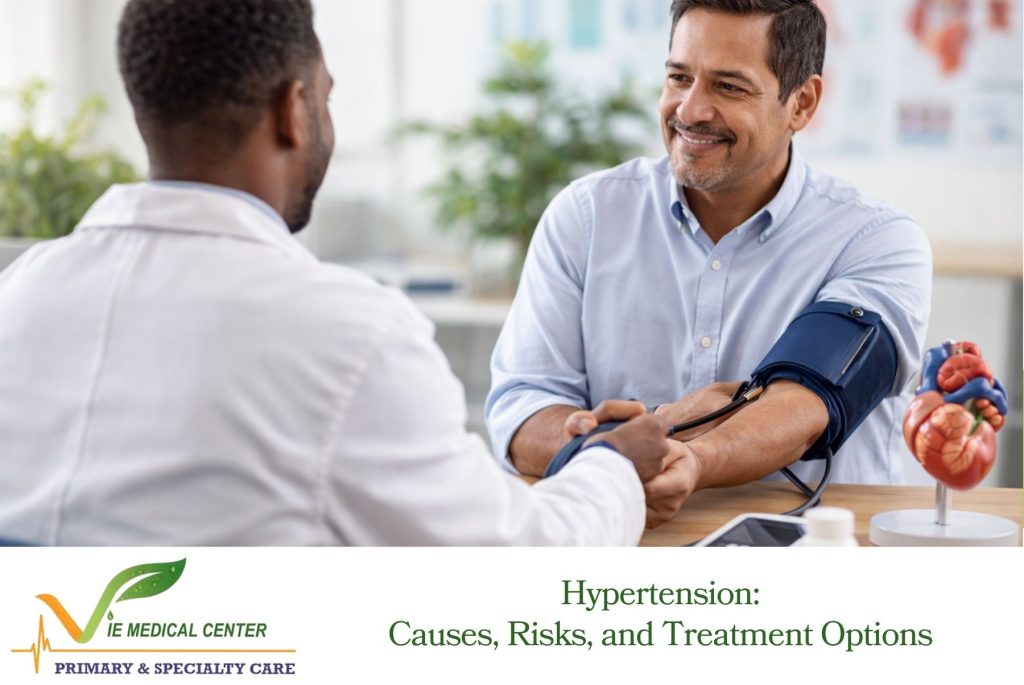
Hypertension, commonly known as high blood pressure, is one of the most prevalent yet manageable chronic health conditions affecting adults today. Often called the “silent killer,” hypertension frequently develops without noticeable symptoms, yet it significantly increases the risk of serious complications such as heart disease, stroke, kidney failure, and vision loss.
At Vie Medical Center, we are committed to helping patients understand, manage, and control high blood pressure through personalized care, advanced diagnostics, and evidence-based treatment plans.
What Is Hypertension?
Blood pressure measures the force of blood pushing against the walls of your arteries. It is recorded as two numbers:
- Systolic pressure (top number): Pressure when the heart beats
- Diastolic pressure (bottom number): Pressure when the heart rests
Hypertension is typically diagnosed when blood pressure readings are consistently 130/80 mmHg or higher.
Why Is Hypertension Dangerous?
High blood pressure places extra strain on your heart and blood vessels. Over time, this strain can cause serious health complications, including:
- Heart attack and heart failure
- Stroke
- Kidney disease
- Vision problems
- Peripheral artery disease
- Cognitive decline
Because symptoms are often absent, many people are unaware they have hypertension until complications arise—making routine screenings essential.
Common Causes and Risk Factors
Hypertension can develop due to a combination of lifestyle factors, genetics, and underlying medical conditions. Common risk factors include:
- Family history of high blood pressure
- Poor diet (high sodium, processed foods)
- Lack of physical activity
- Obesity
- Smoking or excessive alcohol consumption
- Chronic stress
- Diabetes or kidney disease
- Aging
How Hypertension Is Diagnosed
Diagnosis involves multiple blood pressure readings taken over time, either in-office or through home monitoring. At Vie Medical Center, our providers may also recommend additional testing such as:
- Blood tests
- Urine analysis
- Electrocardiogram (ECG)
- Imaging studies, if necessary
These evaluations help determine whether hypertension is primary (essential) or secondary to another condition.
Treatment Options for Hypertension
The good news is that hypertension is highly manageable. Treatment plans are tailored to each patient and may include:
Lifestyle Modifications
- Heart-healthy diet (such as the DASH diet)
- Reducing sodium intake
- Regular physical activity
- Weight management
- Stress reduction
- Smoking cessation
Medications
When lifestyle changes are not enough, medications may be prescribed, including:
- Diuretics
- ACE inhibitors
- ARBs
- Calcium channel blockers
- Beta-blockers
Our medical team closely monitors patients to ensure optimal blood pressure control with minimal side effects.
Hypertension Q&A
What are the symptoms of high blood pressure?
Most people experience no symptoms. In severe cases, symptoms may include headaches, dizziness, chest pain, or shortness of breath—but these often appear only when blood pressure is dangerously high.
How often should blood pressure be checked?
Adults should have their blood pressure checked at least once a year, or more frequently if they have risk factors or a prior diagnosis of hypertension.
Can hypertension be cured?
While hypertension is usually a lifelong condition, it can be effectively controlled through proper treatment, lifestyle changes, and regular medical care.
Is hypertension hereditary?
Yes, genetics can play a role. If high blood pressure runs in your family, you may be at increased risk and should monitor your blood pressure regularly.
Can stress cause high blood pressure?
Chronic stress can contribute to elevated blood pressure and unhealthy coping behaviors such as poor diet or smoking.
What foods should I avoid if I have hypertension?
Limit foods high in sodium, saturated fats, and added sugars, including processed foods, fast food, and sugary beverages.
When should I see a doctor?
You should see a doctor if your blood pressure readings are consistently elevated or if you have risk factors such as diabetes, heart disease, or a family history of hypertension.
Why Choose Vie Medical Center?
Vie Medical Center offers comprehensive, patient-centered care focused on prevention, early detection, and long-term management of chronic conditions like hypertension. Our experienced medical professionals work closely with patients to create individualized treatment plans that support lasting health and wellness.
Contact Information
Vie Medical Center
2160 West Atlantic Ave., 1st Floor
Delray Beach, FL 33445
📞 Phone: (561) 425-8888
🌐 Website: viemedicalcenter.com